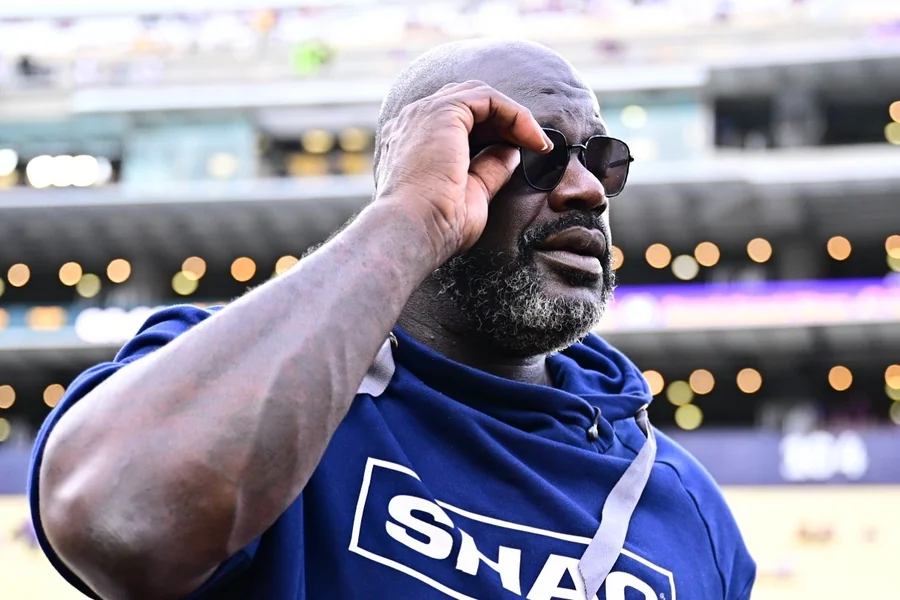
Say the word dominant in a basketball conversation and one figure steps forward in nearly every mind. Shaquille O’Neal has long stood as the image of power on a court, a human landmark whose size set the terms for how opponents defended and how fans talked about the sport. His height, in particular, has been retold, rounded, defended, and doubted for decades. The legend around his stature became part of the show, yet there is a real person inside that number, with shoes that are hard to find and a backboard-breaking game that forced the league to bend around him.
Official listing, personal comments, and why the number moves
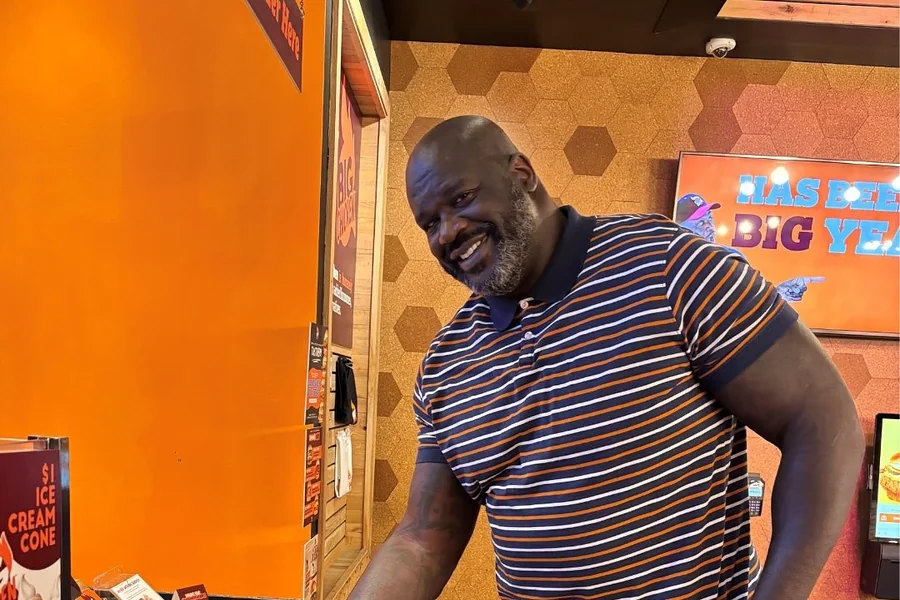
On paper, Shaquille O’Neal is listed at 7 feet 1 inch. That entry appears in his professional bio and on the plaque that marks his place among the all-time greats. It tells a simple story. Then you hear him talk about it and the edges blur a little. In conversation, he has offered a different version at times, sharing that he measures a bit under the listing. On his show, The Big Podcast, he once joked that he stands 6 feet 11 inches. He explained that the league has a habit of rounding up a player who is near the seven-foot threshold. A taller number looks and feels more imposing. The theater of it fits the show-business side of professional sports.
There is a practical way to make sense of both statements. If he is a hair under seven feet barefoot, add a pair of those giant Reeboks and the number lands where the roster says it does. In broadcast graphics or a media guide, that bump is normal. For a defender who feels the weight and length leaning into their chest, the difference is academic. The presence is the point.
How Shaq’s height reads in metric units
For readers outside the United States, or anyone who thinks in metric measurements, Shaquille O’Neal’s listed height converts as follows:
- Feet and inches: 7 feet 1 inch
- Centimeters: 216 cm
- Meters: 2.16 m
Numbers on a page are one thing. Standing next to him is another. The metric translation keeps the math tidy, but the true impact shows up in photos and highlights where scale becomes obvious.
From tall kid to towering professional
Shaquille O’Neal’s growth curve tells its own story. He was not born a giant, yet he was almost always the tallest person in the room as a child. The pace of his growth made the ordinary parts of life harder. Clothes were tough to buy. Shoes were even worse. By his early teens he was already looking down at most varsity players. By the time teams were scouting his future, he filled a doorway.
Here is a simple snapshot of how his height stacked up at different ages:
| Age | Estimated Height |
|---|---|
| 10 years old | 5 feet 10 inches |
| 13 years old | 6 feet 6 inches |
| 16 years old | 6 feet 10 inches |
| 21 years old, draft year | 7 feet 1 inch |
At 13, he already matched or surpassed the height of many professional guards. That kind of head start transforms a high school gym. Picture a teenager who is nearly seven feet tall sealing the lane and reaching over crowds for rebounds. It was a mismatch most nights. The team results reflected that advantage, and the reputation followed. Players and coaches who ran into him in those years were dealing with a body type that does not come along very often.
A foundation that could carry a mountain
Height tells part of the story. The rest is what that height sits on. Shaquille O’Neal’s base is monumental. He is not simply long. He is built to push. That power starts in his feet and legs and rises through a frame that could hold position against almost any shove. The feet themselves are famous.
Size 22 shoes and a lifetime of hunting for pairs
He wears a size 22. The average American man wears roughly a 10 and a half. That makes Shaq’s footwear nearly double what you will see on most shelves. As a kid, finding anything that fit was often a project. His father would ask store managers for help because regular inventory rarely ran that large. Even as an adult, he cannot simply wander into a shop and grab a pair of loafers. Custom or special-order solutions became the norm. His sneakers look like small boats next to a standard pair.
Weight then and now
His mass turned post play into a physics lesson. During the championship runs with Los Angeles, he was not only towering, he was heavy. His playing weight reached the mid 300s, with reported highs ranging from about 325 pounds to 350 pounds, and there are accounts that he crept close to 400 toward the end. That load, combined with quick feet for his size, was how he moved people. It made the paint feel like his private office.
By 2026 he placed more focus on his health. He spoke about dropping roughly 55 pounds to return to the 350 range. He has shared pieces of that process through social media, letting fans see workouts and progress. Even with less on the scale, he remains huge in retirement. The contrast between his size and that of other retired players is still striking. Around him, large men look merely tall.
How he stacks up against other massive names
Comparing giants is part of basketball culture. With Shaq, those comparisons reveal how unusual his blend of height and heft really was.
- Wilt Chamberlain was also listed at 7 feet 1 inch. They matched on paper, but Wilt carried his height with a leaner look. Shaq brought more ballast.
- Yao Ming stood 7 feet 6 inches. He is one of the rare players who could make Shaq look closer to ordinary by comparison. Standing together, the difference is obvious, yet Shaq still appeared broader.
- Victor Wembanyama represents the new era at 7 feet 4 inches. He is taller, but his body type is much lighter than Shaq was in his prime, by about a hundred pounds. The contrast shows how many shapes seven-footers can take.
Fans sometimes try to map Wembanyama’s future onto Shaq’s past. The better view is to see them as different categories. One is a slender skyscraper, built for length and fluid skill on the perimeter. The other was a wrecking ball that lived in the paint and moved crowds with force. Height might be similar on a chart, but the experience of facing them is not the same.
Photographs that break the scale
Shaquille O’Neal’s size is entertaining all by itself when he stands next to people the public knows well. The visual joke writes itself when he shares a frame with Kevin Hart, who stands 5 feet 2 inches, or Simone Biles at 4 feet 8 inches. The difference is almost cartoonish. You can see why brands love to put him in ads next to people who are considered small. The contrast sells the message in a single frame.
Even well-known tall figures shrink next to him. Place him beside Arnold Schwarzenegger at 6 feet 2 inches and the movie icon seems like a regular person next to a colossus. That kind of optical punch contributed to his success in commercials and cameos. He is a walking special effect. The industry even gave that phenomenon an informal nickname. It became the Shaq Effect, where the scale difference alone added a burst of instant humor or wonder.
What height meant on the court
Height by itself does not win titles. Many tall players have passed through the league without a lasting imprint. Shaq’s edge came from the way he combined size with coordination and leverage. He was agile for a man that big, and he knew how to position his hips and shoulders to create space. Once he set a seal, defenders had to make impossible choices. Front him and he pushed through. Play behind and he buried you under the rim. Trap him and he kicked the ball to shooters. His size forced teams to change their plans and lineups.
His height set the release point for hooks and drop steps out of reach. His wingspan turned rebounds into a private stock. The weight behind that reach meant that hits did not move him off his spot without serious help. On fast breaks he looked like a freight train catching the ball in stride, because his long steps and strength closed distance in a hurry. Backboards did not always survive. When he arrived with two hands and momentum, hardware sometimes paid the price.
Why the numbers still fascinate fans
Part of the reason his height keeps getting revisited is that fans want to pin down the exact edges of a legend. Officially he is 7 feet 1 inch. He has also said he sits a little under that without shoes. The truth can allow both. Sneaker height varies and measurement standards are not always uniform. The league loves clean round numbers. His jokes about being 6 feet 11 inches add to the mystique rather than settle it. The conversation keeps going because it is fun. He plays along because he understands showmanship.
Another reason the topic stays hot is that he used his gifts so completely. Many seven-footers are delicate. He was not. He took the stereotype and crushed it into something new. His size was not only a number on paper. It was a strategy and a threat and a kind of theater in motion. The result was a career that warped the court around him.
The business of being very large
Sustained fame requires more than highlights. Shaquille O’Neal turned his physical presence into a broad public identity. His height and bulk made him unforgettable at a glance. That helped in every setting where memorability matters. Commercials. Guest appearances. Public events. Standing next to him created instant content for anyone in the frame. Brands leaned into that, and he leaned into it with them. His humor and willingness to poke fun at his own size made the entire package work.
By 2026 the world did not just recognize him as a former center. He was a cultural figure who had crossed from the court into business and entertainment. The height that once made gymnasiums feel small now made studios and stages feel the same way. The fascination never really ends because he understood how to turn a biological fact into a durable story.
Legacy of a giant, measured and unmeasured
If you reduce him to a tape measure, you will miss the full picture. Whether you prefer the official 7 feet 1 inch or the self-declared 6 feet 11 inches without shoes, his contribution cannot be tallied in inches alone. He forced teams to adjust rosters. He rewrote the calculus of help defense. He pushed the league to think about how to protect the rim and how to build around someone who could bend steel under the basket. The sport carries his fingerprints in countless small ways.
The other part of the legacy lives off the court. He spread a kind of giant-sized joy. He understood that his presence could be playful as well as intimidating. That openness made him accessible even when he towered over people. Fans saw the mountain and the smile. In a celebrity landscape that often feels distant, he was both larger than life and approachable. That is a rare mix.
Quick answers to common questions
How tall is Shaq?
He is listed at 7 feet 1 inch. He has also said he measures a little shorter without shoes.
What is his real name?
His full name is Shaquille Rashaun O’Neal.
When was he born?
He was born on March 6, 1972.
How many NBA championships did he win?
He won four NBA titles during his career.
Which teams did he play for?
He played for the Orlando Magic, Los Angeles Lakers, Miami Heat, Phoenix Suns, Cleveland Cavaliers, and Boston Celtics.
Is he in the Basketball Hall of Fame?
Yes. He was inducted into the Naismith Memorial Basketball Hall of Fame in 2016.
The simplest takeaway
Measurements can slide a little based on shoes or setting, but there is no mistaking what Shaquille O’Neal brought to basketball. He was immense in every sense, from the paper numbers to the way he filled a paint to the way he filled a room. That is why the talk about his height has lasted so long. It is a doorway into understanding how someone can be both a statistic and a spectacle, a person and a phenomenon. However you label the inches, he stands as one of the most imposing figures the game has ever known.