Walk into a polished shop in Brooklyn or Silver Lake today and you will see a familiar outline reimagined. The mullet is not a costume, and it is not a cry for attention. It is a deliberate blend of structure and flow that embraces the hair’s movement instead of wrestling it into submission. The appeal is simple to understand once you see it done well. So many cuts flatten personality. This one puts shape, weight, and texture where they matter most, then lets the ends trail off with intent.
People love to reduce the 80s to neon and regrettable choices. Yet the underlying concept survived because it solves a real design problem. You want a tidy frame around the face that still gives you drape and attitude through the back. That balance is not shabby or chaotic when executed by someone who understands transitions. It is measured. It is sculpted. It is one idea with a dramatic finish.
Look at red carpets and editorials from the past year. Names like Paul Mescal and Jacob Elordi have worn updated versions that feel expensive rather than ironic. The old jokes about a certain country star fade when the taper is clean, the texture is controlled, and the top flows into the back without a hard cliff. If the head looks like two different people got into a fight over it, something went wrong in the chair. In 2026, the look should read as a single sentence with an extended clause at the end, not two clashing paragraphs.
The Long Road Of A Short-To-Long Shape
The origin of this silhouette goes much further back than glam rock and lacquered bangs. Ancient Hittite warriors and Roman teenagers wore a short front and longer back because it was useful. Vision stayed clear, the neck got shade, and life went on. Practicality set the template long before modern music turned the idea into a statement. By the time David Bowie made razor-sharp shapes mainstream in the 70s, the cut was not just hair. It was a rebuke of what felt tidy, safe, and predictable.
The 90s tried to bury the look by tying it to class and taste in the worst way. That take misunderstands the design language at play. Hair is architecture. There are rules of weight, movement, and proportion. Fast forward to now, and the mullet has been reframed as a gender-neutral power move. It is louder than corporate grooming and far more expressive than those polite, anonymous styles that filled the 2010s. The industry that mocked it for years now charges a premium for the technical layering and detail it takes to nail the transition from crown to nape.
What The 2026 Mullet Actually Looks Like
There is no single template for this shape. Hair type, density, curl pattern, and lifestyle all change how the outline should be constructed. A one-size approach is a red flag. The best barbers and stylists start with texture and head shape, then tailor the length map so the front to back gradient looks like it grew that way.
The Tapered Baby Mullet
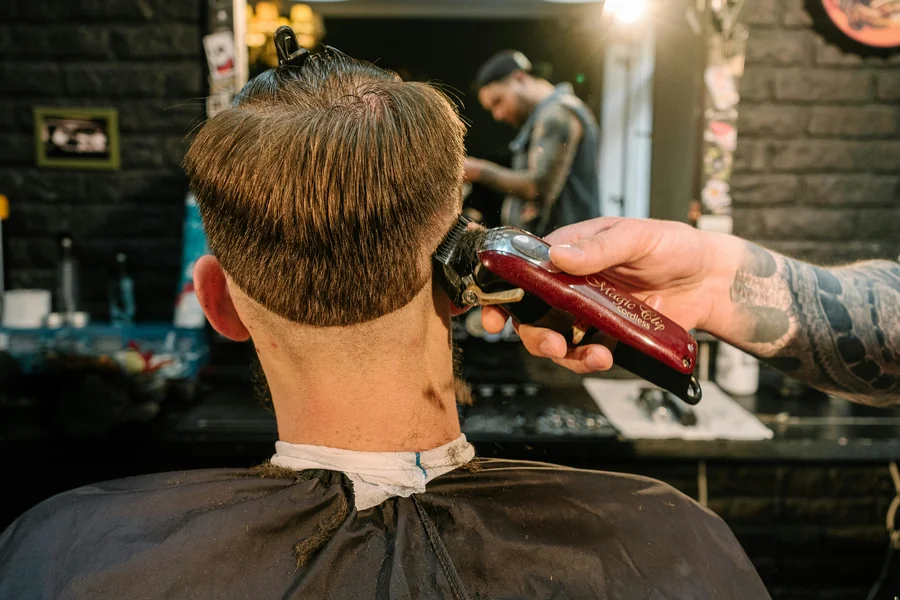
Think of this as the subtle version for people who answer emails before 9 and still want edge on the weekend. The sides are not shaved down to nothing. They are tapered so the silhouette narrows near the ears without hard lines. The back remains longer than the front, but it is a murmur, not a shout. You keep your office credibility and still earn nods at a show on Friday. It is a gateway shape for anyone curious about the look without wanting to jump straight into a high-contrast finish.
The Modern Fade
Here the sides get tight around the temples, then crash into a textured top that rolls into length through the back. The contrast photographs beautifully, which is why this version is everywhere in the US right now. It is sharp and assertive. The tradeoff is upkeep. To keep that tight frame clean, you are booking time in the chair often. Let it go too long and the crisp edges blur, the weight shifts, and the whole thing loses its bite.
The Shaggy Wolf Cut
Call it marketing or evolution, but the so-called wolf cut is a layered mullet by another name. It thrives on movement. Wavy and curly hair types love it because layers activate coils and bends without forcing them flat. From the front, it should look airier and fuller rather than bulky. Through the back, it stretches and softens into something with sway. The effect is effortless on the surface, but hidden work in the layering is what makes it feel natural instead of chaotic.
Face Shape, Proportions, And Why Geometry Matters
It is easy to say wear what you like. It is also true that the human eye responds to proportion. A great cut respects that. If the goal is to flatter the wearer, then bone structure and face shape set limits and opportunities.
- Round faces need lift on the top. Extra height lengthens the visual profile. Keep the sides from getting too wide or the face looks broader. The back can be long, but it should taper in slightly to avoid creating a helmet effect.
- Square faces benefit from softened sides so the jaw does not look harder. Texture around the temples and above the ears stops the outline from feeling like a block. A bit of drape through the back adds motion that contrasts the angles.
- Heart-shaped faces, with a wider forehead and narrower chin, welcome extra weight behind the ears and through the nape. That added mass balances the strong top half of the face.
- Oval faces can wear almost any version, from a demure tail to a bold cascade. The key is to keep the top in scale with the back so it does not read as two separate haircuts.
A pro will also look at ear position, crown growth patterns, and where the head is widest. For example, if your ears stick out slightly, a heavy ledge at that height will draw attention. Shifting volume up or down a notch can avoid that. Bring inspiration photos, then ask for adjustments based on your features rather than demanding an exact copy.
How To Style It So It Looks Intentional
The lived-in effect in 2026 is a finish, not an accident. No one rolls out of bed camera-ready. The products and tools you choose decide whether your shape reads as modern or dated.
- Avoid heavy gels and anything that leaves a wet sheen. Shiny, crunchy strands pull the look straight into the past.
- Sea salt spray on damp hair builds a matte, gritty foundation. It separates layers so the shape is visible rather than blob-like.
- If your strands are fine, dust a little texture powder at the roots once dry. It props up the top so it does not collapse by the afternoon.
- For curls and waves, a quality curl cream is essential. Use enough to define without smothering. You want bounce with control, not a frizz cloud.
- Diffuse on low heat to set curves, or air dry and scrunch if your pattern holds. Save high heat for specific tweaks near the fringe or crown.
- Finish with a matte paste or lightweight clay, emulsified fully in the palms. Tap it through the top and mid-lengths to nudge direction and enhance separation. Keep the ends touchable.
The aim is texture that moves. You should see layers, not wet ropes. If your hair looks stiff, you used too much hold. If it looks flat, add root lift around the crown and cut back on heavy creams.
Maintenance Is The Cost Of Looking Effortless
Here is the non-negotiable truth. This cut is not a set it and forget it situation. The shape depends on clear contrast and an intentional gradient from front to back. When the sides grow out, they swallow the outline and the whole character disappears.
Plan for frequent touch-ups. The sides usually need a clean-up every few weeks to keep the profile tight. By week four, hair around the temples can bend over the ears and muddy the outline. The back is more forgiving and can go longer between trims, but leave it too long and the tail looks saggy instead of composed.
Care matters as much as shape. The long portion in the back rubs against collars, scarves, and coats, which roughs up cuticles and dries the ends. Build a simple routine.
- Use a clarifying shampoo on a regular schedule to lift product build-up and grit. Follow with a nourishing wash on off days so you do not strip everything out.
- Apply a leave-in conditioner to the ends after washing. It keeps the last few inches from splitting and turning stringy.
- Detangle gently from ends to roots. Tugging stretches wet hair and frays the tips, which ruins the smooth fall through the back.
- Sleep on a smooth pillowcase and keep collars from gnawing at the ends when possible.
Budget the time and money. This is not a cut you can neglect for two months and expect to bounce back overnight. A consistent cycle of trims and at-home care is what separates a stylish silhouette from an unintentional tangle.
Why This Is More Than A Passing Fad
Trends come and go so brands can sell a new look every season. The mullet resists that churn because it is a framework rather than a micro-style. It can slant rugged, refined, glam, or minimal. It adapts to straight hair, waves, or curls with equal ease, as long as the transition from front to back is engineered for that texture.
In 2026, personal style is splintering in interesting ways. You see undercuts combined with soft tails. You see bold color tossed into layered backs. You see perms paired with fades. The old rules feel dated because they were built around one version of polish. Some traditionalists still champion a narrow idea of what looks respectable. Yet chairs keep filling for cuts that make people feel like themselves. That is the point. This silhouette gives room to express without abandoning structure.
Consultation Tips Before You Commit
Success starts before the first snip. Use your consultation time wisely so you walk out with a shape that suits your life, not just your mood today.
- Bring two or three reference images that show different angles, then explain what you like in each shot. Is it the length at the nape, the softness around the ears, or the lift at the front
- Share your routine honestly. If you will not style every morning, your pro needs to reduce layers or choose a version that air dries into place.
- Discuss your workplace expectations. You can keep the edges softer and the back restrained while still honoring the silhouette.
- Ask where your growth patterns fight the shape, like a strong crown swirl. A skilled hand can plan the gradient to work with that, not against it.
Listen if your stylist suggests length adjustments for your face shape. Slight changes at the temple or nape can make or break the line on your features.
Common Mistakes And How To Avoid Them
- Two haircuts on one head. If the top ends abruptly and the back begins with a hard step, the eye reads a disconnect. Ask for a blended bridge zone where texture links the sections.
- Too much width at the widest point of the head. This makes faces look rounder. Keep volume a touch higher or lower to avoid ballooning.
- Over-shiny product. Glossy strands flatten layers and throw the look back in time. Matte or natural finishes show texture without glare.
- Neglected ends. Frayed tails look tired. A quick dusting every so often keeps the last inches crisp and lively.
- DIY disasters. Cutting the back evenly on yourself is a trap. Angles, elevation, and overdirection matter. If you miss, you will be hiding under hats while it grows out.
Living With It Day To Day
The moment the cape drops you will feel air on your neck and know whether you own this cut or it owns you. Half measures rarely satisfy. A timid, halfway version tends to read confused. If you decide to do it, commit to a clear silhouette, accept the upkeep, and learn a quick daily routine that suits your texture.
A simple morning plan goes a long way. Mist with water or a sea salt spray. Scrunch or brush into direction depending on your pattern. Dry on low with a diffuser or let it air set while you get ready. Tap in a tiny bit of matte product to define key areas. Done. Ten minutes beats a full restyle at lunch because everything collapsed.
FAQs
Does it work for thin hair
Yes, with caveats. Keep the top short to medium and choppy so it lifts. If the back gets too long, it can look stringy. A small amount of volume powder at the roots helps keep things from falling flat.
How often do I need a trim
Plan to clean up the sides every three to four weeks to protect the outline. The back can stretch longer between appointments, but the overall shape loses energy fast when the temples and around the ears grow out.
Is it unprofessional for the office
In 2026, execution matters more than length. Keep the finish clean, choose a matte or natural product, and avoid harsh contrasts if your workplace is conservative. A tapered version reads polished while still delivering the signature outline.
Can I cut it at home
Skip it. The back is where most home cuts go wrong. Once you carve an uneven shelf or chew up the outline, you are stuck waiting for it to grow while covering it up. See a pro who understands blending and length mapping.
The Bottom Line
The modern mullet succeeds because it marries discipline with freedom. Up front, hair frames the face with intention. In back, it stretches into something dramatic. When the blend is honest and the care is consistent, the cut feels inevitable, not loud for the sake of it. The style has traveled from battlefield practicality to rock rebellion to a versatile, gender-neutral staple that thrives by letting people be themselves. If that sounds like what you want from your hair, book the consultation, bring your references, and commit to the maintenance. The silhouette will return the favor every time you catch your reflection and see movement instead of monotony.