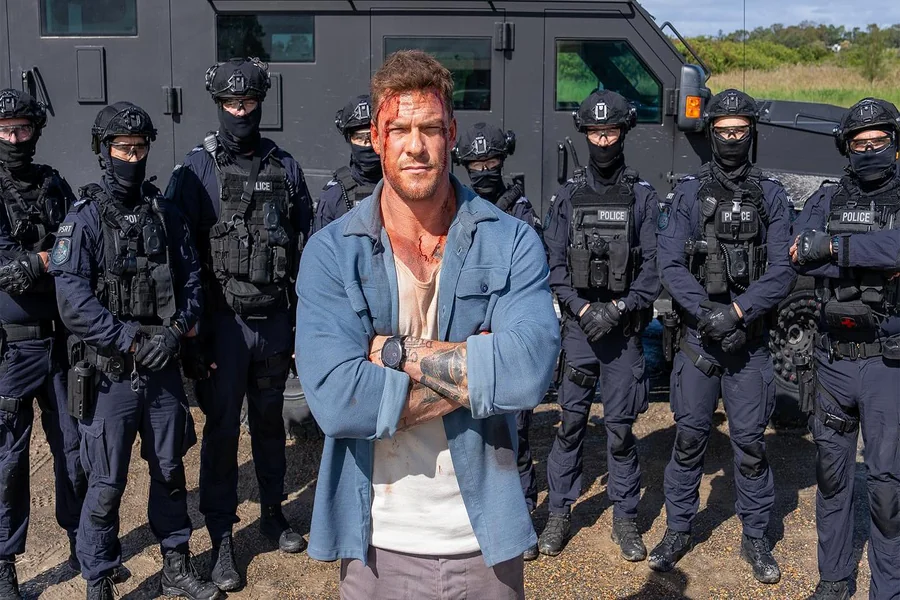
Conversations about Alan Ritchson often circle back to one detail before anything else. How tall is he really. The question follows him from set to set, echoing louder since he took on the lead in Reacher. His frame, his carriage, and the way he fills a doorway help define the character for many viewers. Height turns into a character trait. It shapes the audience’s intuition about strength, command, and danger before a line is spoken.
Ritchson became a familiar face through a string of roles that reward a broad build and an athletic silhouette. Think of the college antics in Blue Mountain State. Think of the sharp edges of Titans. In Reacher his physicality is not a bonus. It is the foundation. Lee Child’s creation is described on the page as a towering drifter whose size changes every social dynamic the moment he enters a room. When the role moved to television, fans wanted to see a performer who embodied that presence from every angle.
Why his height draws so much focus
Jack Reacher is described in the novels as extremely tall. The books set a benchmark at around six foot five. That number set the tone for what readers expect on screen. After a previous film interpretation with a much shorter star sparked pushback, attention to scale became part of the casting conversation. The aim was not only to find a strong actor, but also someone who looks like a man people instinctively step aside for. Enter Alan Ritchson, already known for a powerful build and broad shoulders.
From the first shots of the series, his size is part of the narrative. He stands square to the camera, carries bulk through his chest and back, and holds himself with the stillness of someone who does not need to bluff. His posture and proportions do as much work as his lines. That is why fans keep returning to the question of exact measurements. They want to match what they see on screen with a number they can compare to the character in the books.
The reported numbers and the ongoing debate
Public figures often have more than one height floating around. Listings shift from site to site. Some are out of date. Some are round numbers meant for quick bios. The same is true for Alan Ritchson. The most repeated figure for him is six foot two, also listed as 188 centimeters. There are also claims that he stands six foot three, which would put him at about 1.91 meters. That small gap feeds an outsized debate, because a single inch can look much larger when paired with heavy boots, a tactical jacket, and a lens pointed up from knee level.
Across interviews and professional bios, six foot two appears again and again. The figure shows up in industry databases, in agency-style listings, and in comments attributed to the actor himself. Fans have also heard claims of six foot three. Some point to moments in the show where he appears similar in height to co-stars who are listed at that level. Others note how his head clears certain door frames in scenes and try to reverse engineer a measurement from set design. That kind of visual math can be misleading. Production teams plan shots to support the character’s aura, not to perform a measurement on screen.
It helps to separate two ideas. One is the number on a casting sheet. The other is the feeling of scale built by muscle mass, clothing, camera height, and blocking. A lean person at a certain height reads differently than a heavily muscled person at the same height. Ritchson brings a dense frame that enlarges his silhouette, so he can read as taller than the measuring tape suggests.
How filmmaking makes a big man look even bigger

Television crews work with many techniques to strengthen a character’s presence. Ritchson arrives with the advantage of genuine size, then the show builds on it.
- Low angles. Placing the camera below eye level makes torsos loom and increases how much of the frame is filled by the actor’s body.
- Forced perspective. Arranging co-stars a little farther back or slightly lower on uneven ground creates a feeling that the lead stands higher and closer to the viewer.
- Footwear and wardrobe. Boots with thick soles and structured jackets add physical volume and a bit of extra height. Heavy fabrics keep shoulders looking squared and wide under light.
These choices are not tricks in the sense of deceiving the audience. They are storytelling tools. Reacher is written as someone who enters a room and changes it by existing. The production honors that intent. What matters for the story is the perception of immovable force. The camera gives the character that power without needing to change the facts of the actor’s body.
Six foot two or six foot three
So where does the tape measure land. When you look across the most stable sources in the entertainment world, six foot two appears consistently. That figure aligns with agency profiles and with statements connected to the actor. At the same time, some descriptions place him at six foot three. There are also passages that assert six foot three when discussing measurements without shoes, which only clouds the picture more. The split is narrow, but fans are exacting because the fictional version of Reacher is listed as even taller.
Either way, the difference between six foot two and six foot three is modest compared to what the role demands in spirit. On screen he reads as massive, which is what the character needs. Standing in the low two hundreds for height and carrying significant muscle, he comes across as far larger than most actors in close quarters. It is the overall form that does the work, not the single digit after the foot mark.
Weight, training, and the build that magnifies height
Height alone would not create the same effect without the body mass to match. For Reacher, Ritchson increased his size with a focused plan. Reports place his weight for the role in the 235 to 240 pound range. The route there was not casual gym time. It involved progressive work, starting with bodyweight basics like push-ups and pull-ups and moving into heavier sessions built around big compound lifts such as squats and deadlifts. Volume went up. Frequency rose to a busy five day split, aimed at maintaining size across chest, back, legs, and shoulders while protecting joints for the long production schedule.
To sustain that growth he followed a high calorie approach, with figures around 4,500 calories per day and protein intake near 300 grams to support recovery. Discussions around his preparation have also included mention of testosterone replacement therapy in a clinical dose, framed as part of how he maintained his physical state for later seasons. The aim across these choices was not to look lean for a single scene, but to hold a powerful frame for months of shooting and fight choreography.
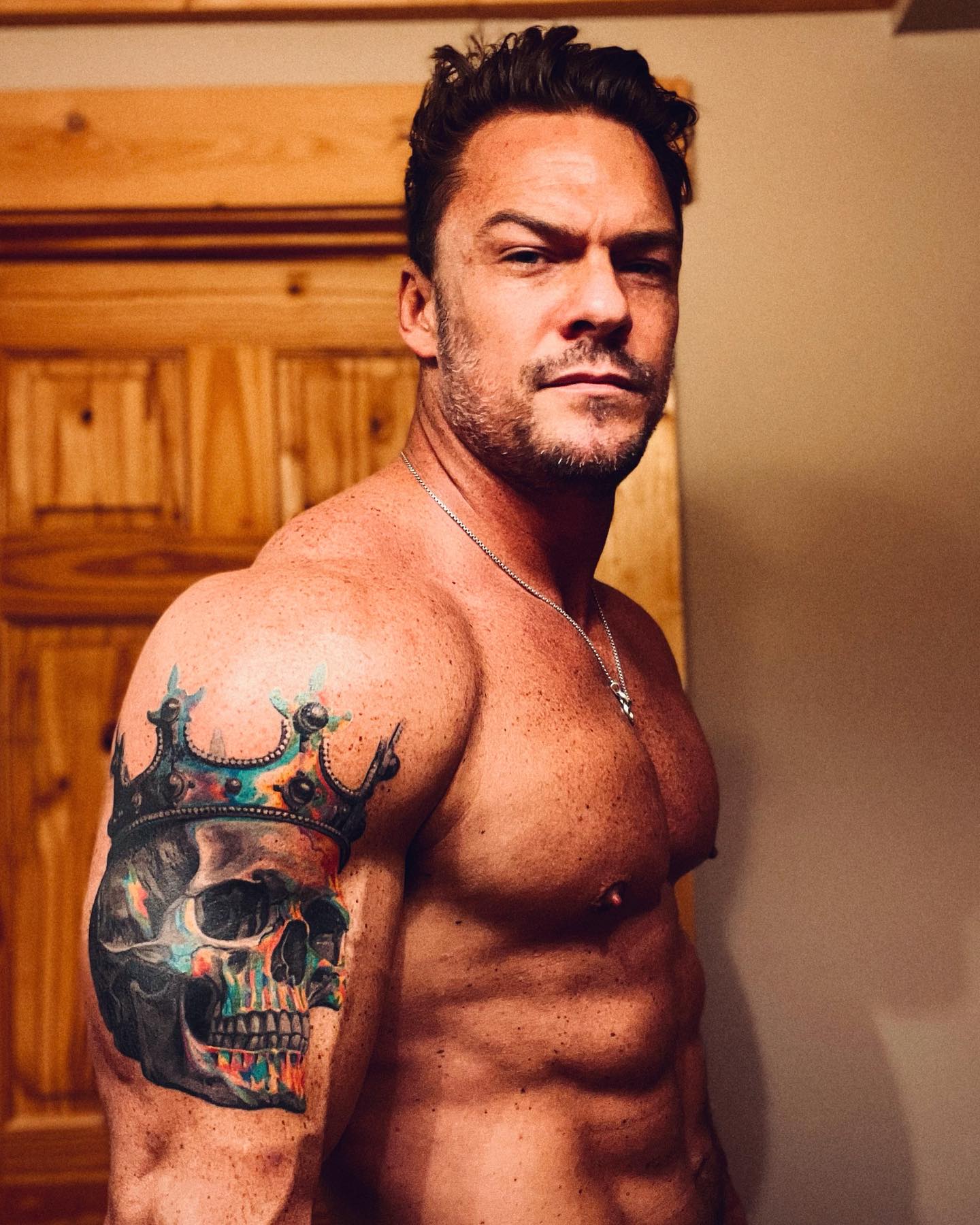
That much added muscle changes how viewers interpret height. A person who is six foot five but thin can look less imposing than someone who is a little shorter yet carries heavy shoulders, a deep chest, and thick forearms. Ritchson’s chest width and upper back development create a strong V shape, which turns into an instant read of strength under a T-shirt or a jacket. Even static shots signal weight and leverage. The impression he gives is less about reaching a fictional benchmark and more about convincing you he can break handcuffs without looking for a hinge.
Comparisons and context
Fans love to place actors side by side in imaginary lineups. When you hear names like Dwayne Johnson or Chris Hemsworth, you think of performers who dominate the frame through a mix of height and size. Johnson is often placed near six foot four, and Hemsworth is commonly associated with six foot three. Ritchson, at six foot two in many listings and sometimes described as six foot three, stands right alongside that bracket. The company he keeps in the public mind tells you what the audience sees. He belongs to the group of modern leads whose bodies can carry action plots without a single stunt.
Even within his own filmography, you can trace how his build shapes every part he plays. In Blue Mountain State his athletic look fuels the comedy and bravado of college sports culture. In Titans it supports superhero mythology, turning comic panels into believable live action poses. In Reacher the same core traits become more grounded. You believe he can lift a man by the collar, run down an alley without losing pace, and shrug off a shove that would stagger someone else. That continuity is why the height conversation never fades. His scale is not a one-time feature. It is the throughline of his career.
Does he match the book version
On paper Reacher stands taller than either of the common numbers attached to Ritchson. By strict math, six foot two or even six foot three does not equal six foot five. Yet the performance lands with readers and new viewers alike because it captures the effect the author describes. He looks like the person everyone in the room accounts for before they speak. The physical presence reads as mythic, which is what fans wanted after earlier versions left some disappointed. The gap between the print measurement and the on-screen figure matters less than the visceral reaction the character creates.
What constant listings tell us
For public figures, consistency across profiles usually signals the best baseline. With Alan Ritchson, the six foot two figure repeats in the places that aim for accuracy. Self-described comments reflect the same. The six foot three figure appears as well, often in broader write-ups that emphasize his large frame. In practice, both claims live in the conversation because the show makes him feel larger than either number. If you wrestle with these details, you are not alone. Fans love exact answers, and this role invites them.
Screen presence beyond the inch count
The most important point is simple. Ritchson uses his build, his posture, and production support to create the feeling that Jack Reacher should evoke. Size is a tool in his kit. So are stillness, pacing, and eye line. A slight head tilt can reduce another character. A step into someone’s space can signal that a fight is already over. Combined with the mass he carries, these choices make viewers forget whether a tape measure would show 6 foot 2 or 6 foot 3. The outcome is the same. He dominates scenes without raising his voice.
A look at the roles that shaped the perception
Blue Mountain State set expectations that he can play outsize personalities with physical humor. Titans showcased a darker, more intense version of that same strength. The Hunger Games Catching Fire gave him a place in a blockbuster world where survival looks believable only if the performer looks like they can climb, sprint, and fight without burning out in a minute. Teenage Mutant Ninja Turtles tapped into physicality in a different way, pairing motion with spectacle. All of that prepared audiences for Reacher, where the physical form is not just compatible with the role, it is the role’s center of gravity.
So what should fans take away
If you want the most repeated figure, six foot two is the safe bet for Alan Ritchson. If you prefer the higher claim, some sources and discussions place him at six foot three. In either case he is tall by any standard, and his build multiplies that impression on screen. Add in boots, framing, and performance choices, and you have someone who reads as a near match for a character written as almost superhuman in scale.
That combination settled the unease that followed earlier casting choices for Reacher. Viewers felt an instant correction when they saw the new lead in the role. The number on a bio could never carry that by itself. It was the whole package. Height, mass, movement, and attitude came together.
Quick answers to common questions
- Who is Alan Ritchson. He is an American performer known for leading the Amazon series Reacher and for earlier work in Blue Mountain State and Titans.
- How old is he. His birthdate is November 28, 1982.
- Is he married. Yes, he is married to Catherine Ritchson.
- How tall is he. He is most often listed at six foot two, with some mentions of six foot three.
- What are some projects he has appeared in. Credits include Reacher, Titans, The Hunger Games Catching Fire, and Teenage Mutant Ninja Turtles.
- Does he have children. Yes, he has three sons.
- Where was he born. He was born in Grand Forks, North Dakota in the United States.
Final thought
Alan Ritchson’s height will keep attracting attention as long as he plays characters whose force is measured the moment they step into frame. Whether you settle on six foot two or accept the six foot three claim, the meaningful truth is the impression he makes. Put his frame, training, and screen craft together and you get a performer who embodies the intent of Lee Child’s creation. The ongoing debate about the exact number may never end, but the effect on screen is settled. He looks like the man the novels describe. That is what fans asked for, and that is what they got.